Break-even occupancy calculator

How empty can the building get before it stops covering its bills? Enter operating expenses and debt service to find the occupancy the deal requires.

Break-even occupancy

97.0%

Rent has to come in at 97.0% of its full potential to cover $44,244 of costs and debt service, which leaves room for 3.0% vacancy against the 5.0% budgeted.

Rent has to come in at 97.0% of its full potential to cover $44,244 of costs and debt service, which leaves room for 3.0% vacancy against the 5.0% budgeted.

Occupancy the building needs against the occupancy you expect

share of full rent collected

The math, with your numbers

Gross potential rent$45,600Monthly rent × 12$3,800 × 12
Debt service$27,144Mortgage payment × 12$2,262 × 12
Costs to cover$44,244Operating costs + debt service$17,100 + $27,144
Break-even occupancy97.0%Costs to cover ÷ gross potential rent$44,244 ÷ $45,600
Cash flow at expected vacancy−$924Gross potential rent × expected occupancy − costs to cover$45,600 × 95.0% − $44,244
DSCR0.97NOI ÷ debt service$26,220 ÷ $27,144The same coverage question in lender units.

Operating costs leave out capital spending. A building that breaks even here is covering the mortgage, not the next roof.

Calculated on September 30, 2026 at realestatecalculations.com (Break-even occupancy calculator). Every figure above comes from the inputs listed on this page.

Reopen these exact numbers: https://www.realestatecalculations.com/calculators/break-even/?rent=3800&opex=17100&pmt=2262&vacancy=5

How this calculator works

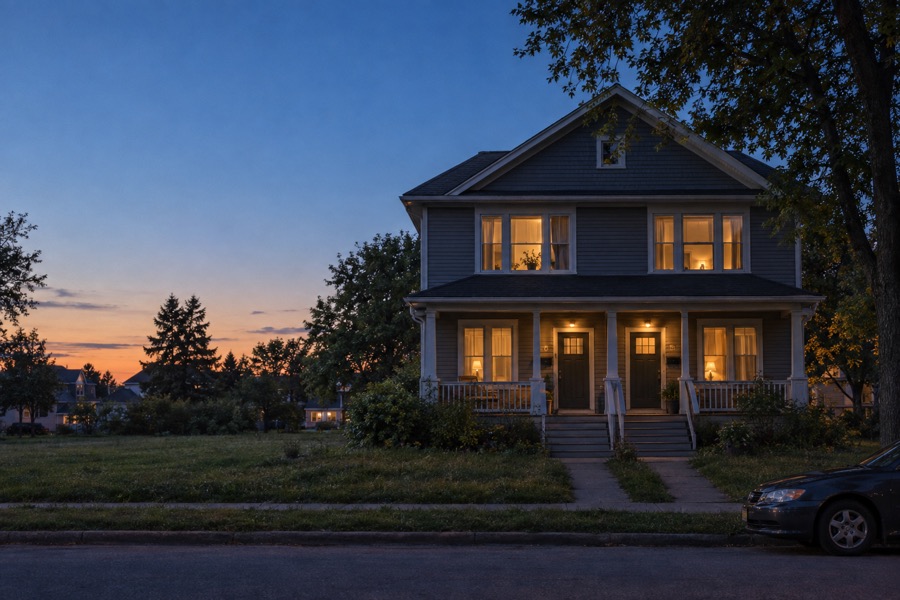
Break-Even Occupancy = (Operating Expenses + Annual Debt Service) ÷ Gross Potential Rent. On the $425,000 duplex: $17,100 of operating expenses plus $27,144 of debt service is $44,244, against $45,600 of gross potential rent. $44,244 ÷ $45,600 = 97.0%.

That result is the occupancy at which cash flow is exactly zero. Above it the property funds itself, below it the owner writes a check. Stated the other way, this duplex tolerates 3.0% vacancy before going cash-flow negative, which is less cushion than the 5% vacancy the same underwriting treats as normal. The contradiction between those two numbers is the deal telling you something.

Key insights

  • Break-even occupancy carries the same information as DSCR, expressed in units an owner actually experiences. A 0.97 DSCR and a 97.0% break-even describe one condition, but the second one answers how many empty months it takes to get there.
  • On a two-unit building, occupancy does not move continuously. One vacant unit is half the building for the length of the turn, so a single vacant month in either unit puts the year at 95.8% and below the 97.0% the deal needs.
  • This metric uses operating expenses, so it inherits their exclusion of capital spending. A building at 97.0% break-even is covering taxes, insurance, management, and the mortgage. It is not covering a furnace.
  • Leverage moves this number far more than operations do. At 50% down, annual debt service falls to $16,965 and break-even occupancy drops from 97.0% to 74.7%, on identical rents and identical expenses.

Frequently asked questions

What is the break-even occupancy formula?›

Break-Even Occupancy = (Operating Expenses + Annual Debt Service) ÷ Gross Potential Rent. On this duplex, ($17,100 + $27,144) ÷ $45,600 = 97.0%. Gross potential rent means fully occupied at market rent, before any vacancy deduction.

What is a healthy break-even occupancy?›

Lower is safer, and the number that matters is the gap between it and the vacancy the submarket actually runs. A property breaking even at 97.0% in a market that runs 8% vacancy is structurally short, regardless of how the pro forma reads.

Why is my break-even occupancy above 100%?›

Expenses plus debt service exceed gross potential rent, which means the property cannot cover itself even fully leased at market rent. The deal needs a lower price, less debt, higher rents, or lower operating costs before occupancy is the relevant question.

Does break-even occupancy include capital expenditures?›

Not under the standard definition, because it is built from operating expenses. Adding a capital reserve raises the break-even point and gives a more honest picture of what the building has to earn to sustain itself.

How does break-even occupancy relate to DSCR?›

They are two views of the same coverage question. As DSCR approaches 1.0, break-even occupancy approaches the point where all potential rent is consumed. This duplex sits at 0.97 and 97.0% at once.

Embed this calculator

Free to use on your own site. Paste this where you want the calculator to appear. It resizes itself to fit, and works without the script if you would rather not load one.

<iframe src="https://www.realestatecalculations.com/embed/break-even/"
  title="Break-even occupancy calculator by Recalc" width="100%" height="720" loading="lazy"
  style="border:1px solid #DDE7E9;border-radius:8px;max-width:680px"></iframe>
<p style="font:14px/1.5 system-ui,sans-serif;margin:8px 0 0">
  <a href="https://www.realestatecalculations.com/calculators/break-even/">Break-even occupancy calculator</a> by Recalc
</p>
<script src="https://www.realestatecalculations.com/embed.js" async></script>

The attribution link is required. Everything else is yours to restyle.

Related guides